
After nearly three years of implementation, the Katarungang Pambarangay (KP) Project of the Ateneo Human Rights Center (AHRC), in partnership with the Department of the Interior and Local Government (DILG) through the National Barangay Operations Office (NBOO), and supported by the European Union’s Governance in Justice (GOJUST) Program, officially concluded in March 2025. As a key and tangible output of the project, AHRC launched a website that serves as a centralized, easy-to-access repository of all resource materials developed throughout the project’s duration.

The KP Project, which began in June 2022, aimed to promote a child-friendly, gender- and LGBTQIA+-responsive, and Indigenous Peoples-relevant Katarungang Pambarangay through the enhancement of the KP Training Manual and the conduct of capacity-building activities for lupon members and barangay officials. In partnership with the DILG-NBOO, AHRC developed an enhanced Katarungang Pambarangay Training Manual designed to equip barangay officials and lupon tagapamayapa with the knowledge and skills to handle dispute resolution in a more inclusive, sensitive, and context-responsive manner.
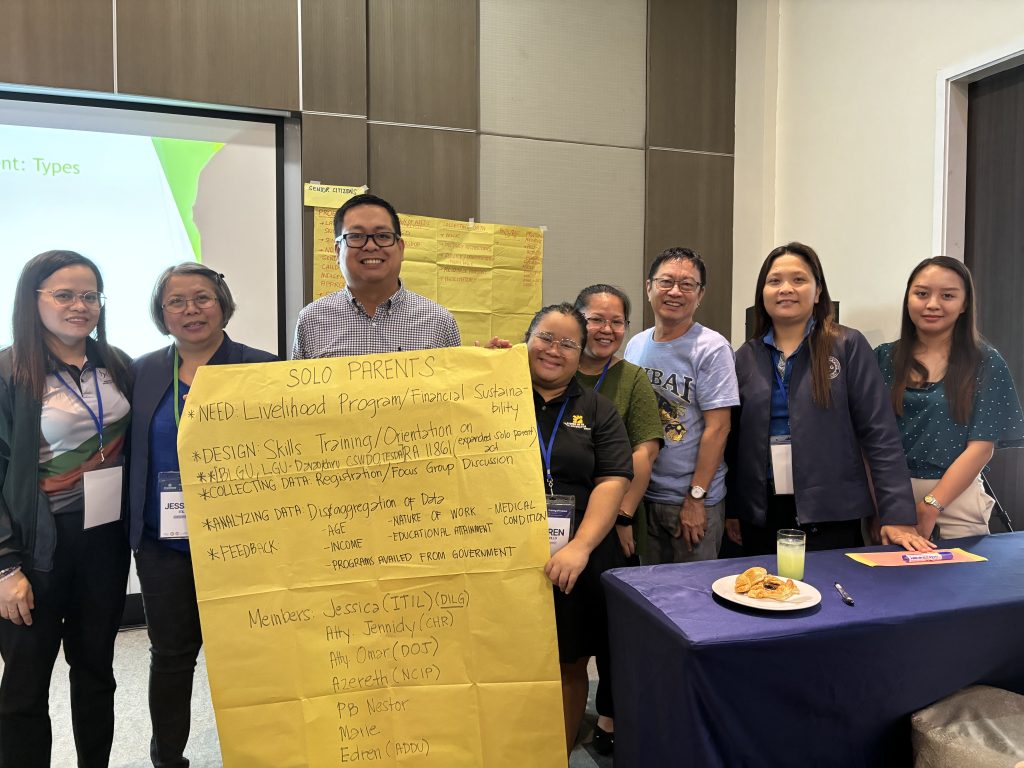
To support these objectives, a series of Training of Trainers (TOT) sessions were conducted in Davao, Cebu, and Iloilo. These activities ensured that frontliners of the barangay justice system, including key government offices, were equipped to handle dispute resolution processes with sensitivity and inclusivity, while upholding fairness for all parties involved.
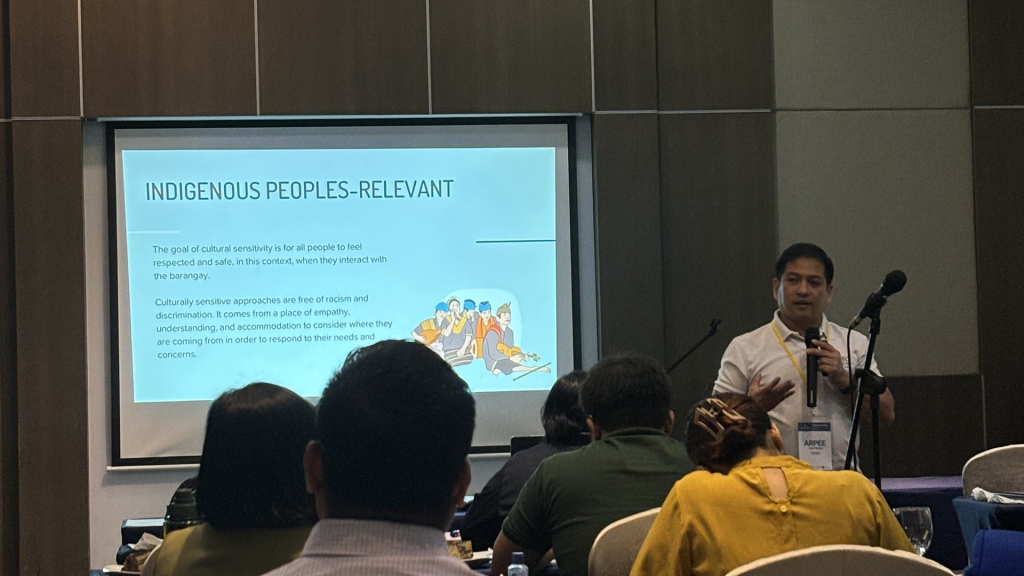
Atty. Paula Sophia Estrella, Program Director of AHRC’s KP Project, emphasized that the capacity-building activities encouraged participants to reflect on existing KP practices and become more attuned to child-friendly, gender-responsive, and Indigenous Peoples-relevant approaches. “With the enhanced Manual, the capacity development of lupon members and barangay officials is framed from the perspective of their constituents,” she stressed.
Katarungang Pambarangay initiatives are not new, as various alternative dispute resolution efforts have been implemented by different organizations, including the Department of Justice. However, the KP Project of AHRC offers a distinct contribution by combining technical knowledge of alternative dispute resolution with a strong emphasis on social context and sensitivity.
Atty. Estrella explained that the project provided updated approaches to the KP process by integrating inclusivity into its core. “There are many trainings and learning resources on Katarungang Pambarangay. Our project provides a lens of sensitivity to context and to the situations of different sectors in the barangay—such as youth, women, members of the LGBTQIA+ community, and Indigenous Peoples—within Katarungang Pambarangay processes,” she said.
Beyond its primary deliverables, the KP Project also opened opportunities for local officials, members of the academe, and civil society organizations to engage in dialogue and explore further collaboration for the benefit of their communities, whether in relation to KP or other local concerns.

Atty. Estrella further shared that the materials developed through the project were utilized not only by the intended beneficiaries but also by project partners in other relevant initiatives, such as the Clinical Legal Education Program (CLEP) of various law schools.
To expand the project’s reach nationwide, AHRC established a website that serves as a repository of all relevant manuals and resource materials, which are freely accessible to the public. Interested parties may visit www.katarungangpambarangay.com to access these resources.
Looking ahead, Atty. Estrella noted that there remains much work to be done to further strengthen the KP process. She emphasized that future initiatives related to Katarungang Pambarangay should be more community-centric, recognizing that barangay communities are ultimately the primary beneficiaries of these efforts.
“There is still so much more that can be done, especially since we have around 42,000 barangays across Luzon, Visayas, and Mindanao, and barangay elections are held every three years. A good priority would be to develop materials that can be used by everyone, regardless of where they are, and to return to different communities to implement all the project activities directly,” she said.