
The Ateneo Human Rights Center (AHRC) is all set for its newest project in partnership with the Royal Norwegian Embassy titled “The Anti-Impunity Clinics: Addressing Impunity and Access to Justice Gaps in Gross Human Rights Violations against Human Rights and Environmental Defenders through Activating Law Clinics and Civil Society Collaborations.”
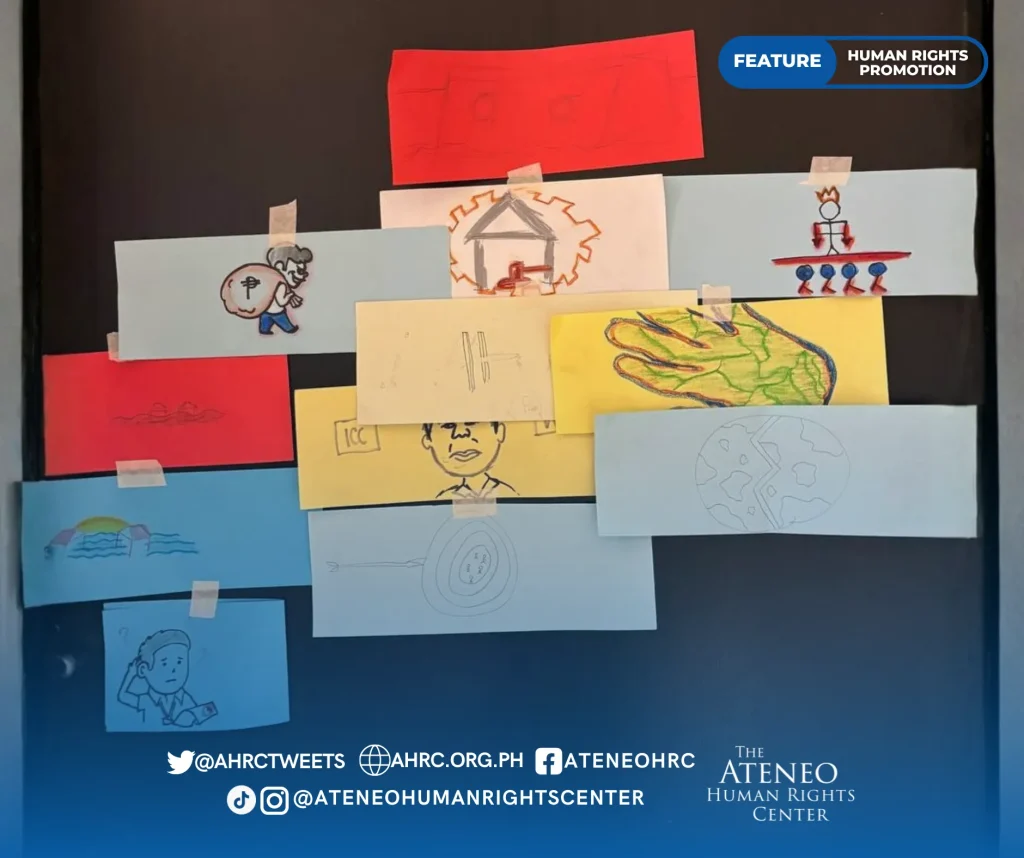
On 24–25 October, AHRC’s resident law student interns and select staff participated in an intensive capacity development training held at Savoy Hotel, Pasay City, as part of the preparatory work for the project’s implementation.
The two-day training aimed to strengthen the interns’ competencies in human rights documentation, trauma-informed interviewing, facilitating focus group discussions, physical and digital security, legal writing, and advocacy development. The sessions were facilitated by AHRC Executive Director Atty. Nicolene Arcaina, Program Officers Atty. Aileen Almora and Atty. Teresa Banta, Internship Director Atty. Billie Blanco, and KERI Mental Health Consultant, Naro Alozo. A special workshop on strategic communication was also led by AHRC Communications Director RJ Sangcap.
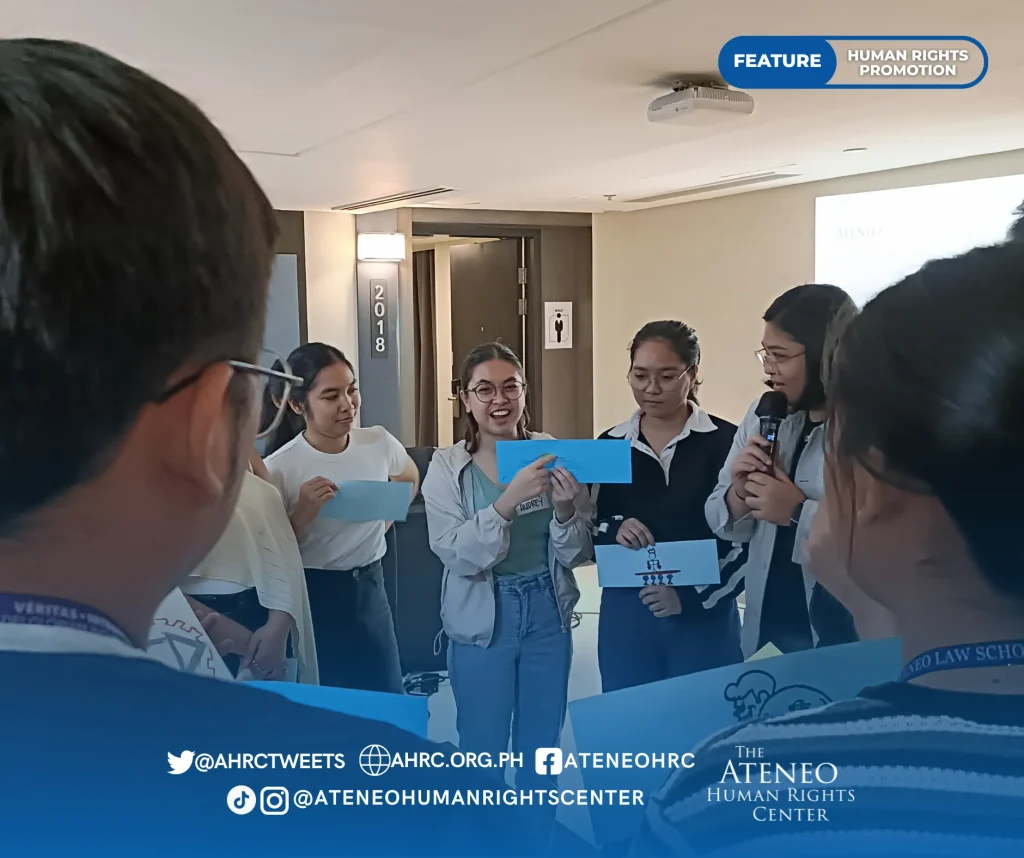
According to Atty. Arcaina, equipping interns with these skills is not only essential for the project but also contributes to the Center’s broader mission in learning the law and training law students to serve the communities.
“The capacity development training session is significant not only in the formation of future human rights lawyers and in the implementation of the Anti-Impunity Clinics. As the training’s design is praxis-focused, this is critical in improving how to approach and address issues of accountability together with communities. To pursue justice is to make sure we do things well,” she said.
Developing these skills is particularly crucial, as the Anti-Impunity Clinics will engage both law student interns and civil society partners in developmental legal work, including stakeholder engagement, evidence gathering, strategic advocacy, legal interventions, and community education.
Interns also recognized the importance of the training in preparing them for the fieldwork.
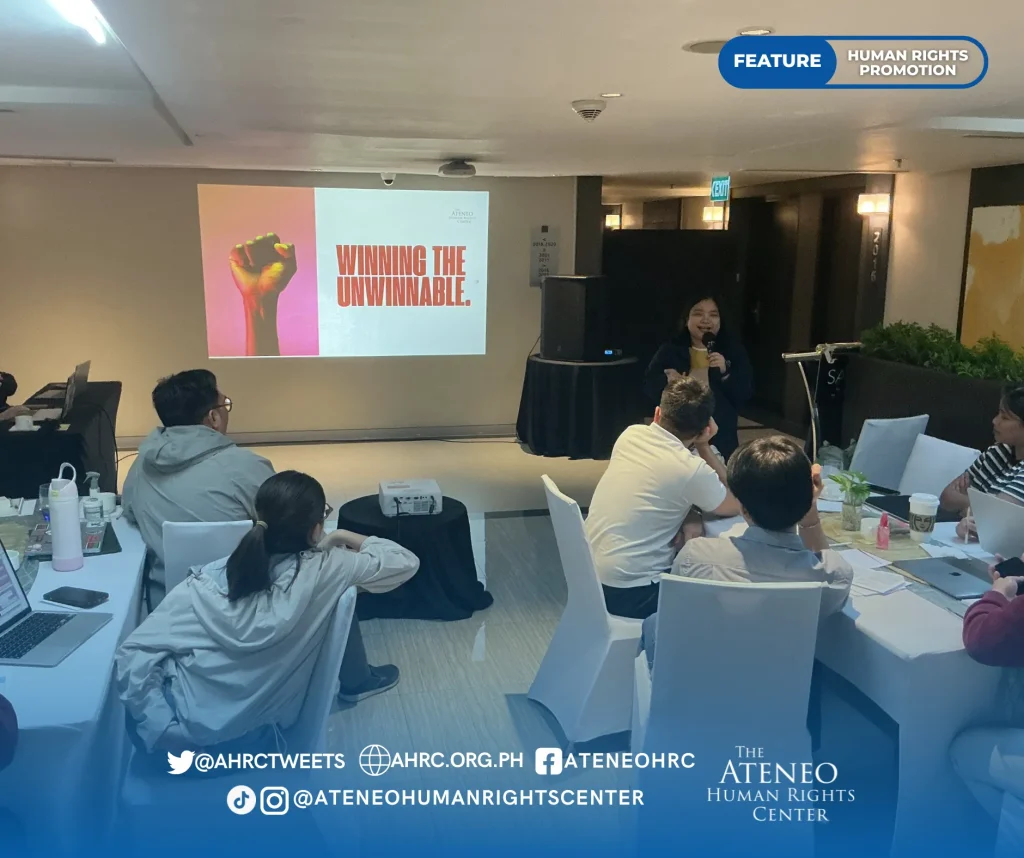
“The training helped me become more equipped for the tasks ahead,” said Daniel Daiz, one of the interns assigned to the legal clinic. “The skills and practical tips we learned will help us better serve our partner communities.”
During the workshops, participants conducted simulation exercises such as issue scoping for the Indigenous Peoples’ Rights Clinic and focus group discussions with partner communities, including families of victims of the government’s war on drugs campaign for the War on Drugs focused clinic.

After the training, the interns expressed both enthusiasm and awareness of the challenges ahead.
“I’m excited to engage with communities and further my learning, yet I remain deeply conscious of the heavy responsibility tied to the clinic’s cause,” shared Dianne Mortrera, AHRC resident intern.
With their newly honed skills, the AHRC interns are ready to begin fieldwork as part of the Anti-Impunity Clinics project, working alongside communities to uphold justice and human rights.