
Written by: Erin Tabangcura, Billie Blanco, Cess Delino
With its commitment to strengthen trial monitoring and legal advocacy to support democracy and rule of law, the Ateneo Human Rights Center took part in the TrialWatch Clinical Network Forum at the National and Kapodistrian University of Athens in Greece, February 8 to 11.
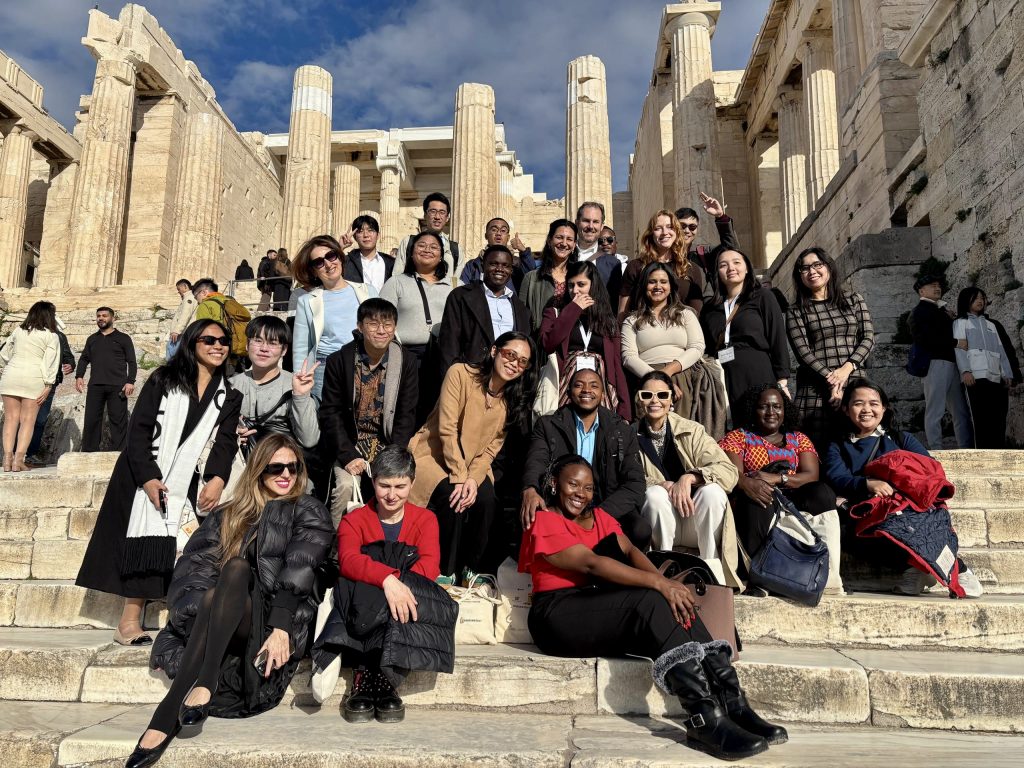
The Columbia Law School – Human Rights Institute, together with the support of the Clooney Foundation for Justice, convened Clinic partners to exchange experiences, crowdsource solutions, and develop strategies in the context of trial monitoring. Students and lawyers from Atma Jaya Catholic University (Indonesia), Thammasat University (Thailand), University of Pretoria (South Africa), and Makerere University of School of Law (Uganda), Columbia Human Rights Institute Clinic (United States), and the University of Georgia, presented their Clinic’s current efforts and challenges in holding their respective governments accountable by ensuring trials adhere to international standards.

“During the first gathering of the TrialWatch Clinical Network, I learned that there are numerous allies across different countries in our campaign in defending and promoting Fair Trial Rights. There is an opportunity to create a global campaign for access to justice,” forum delegate and AHRC intern Aubrey Garganera said of his most memorable experience in the event.
For the Philippines’ case, Clinic interns shared that despite facing challenges in actual trial monitoring, they pivoted to creating advocacy materials to emphasize the importance of monitoring beyond the courtroom. The team led a workshop on joint advocacy, aiming to encourage countries to collaborate and brainstorm on effective strategies that would address certain issues such as authoritarianism, judicial systems, impunity, and access to human rights.
AHRC intern Khylie Isidro reflected on how empowering the experience of facilitating the workshop had been.
“Team Philippines created a space where collaboration was possible, working with people with different expertise and backgrounds. Engaging with these advocates from different countries, each shaped by their own contexts yet driven by similar commitments, reminded me of the strength that emerges when experiences are shared and struggles are collectively understood.”
These advocacies were highlighted during the The Criminalization of Journalism and Dissent Conference by AHRC Internship Director Billie Blanco, who served as a panelist. During the open session, she highlighted the systemic injustices and impact faced by Philippine journalists Maria Ressa, Frenchie Mae Cumpio, and Mary Anne Kruger due to the unnecessary prolonged pre-trial delay and bureaucratic processes of the judicial system.
“The harm caused by criminalization goes far beyond the courtroom. For individuals like Frenchie Mae, the ordeal—from the arrest, prolonged detention, and repeated hearing—create economic and psychological strain. People lose jobs, families take on debt not just struggling to pay legal fees but the mere putting food on the families’ table, and years of life are consumed by showing up for court. Maria Ressa, Frenchie Mae, and Anne Krueger’s cases are but a handful of stories of not just the shrinking civil space but the silencing dissent. It exposes not just the human rights situation, but the flawed justice system”, said Blanco.
Alongside other TrialWatch interns, Garganera and Isidro will continuously monitor developments in the cases of Filipina journalists Frenchie Mae Cumpio, Marielle Domequil, and Anne Krueger, as well as other activists and journalists who have been criminally charged and silenced by the State.
The interns’ efforts will contribute to furthering the advocacy by sharing stories from the ground, particularly the ripple effects of undue delays and bureaucracy caused by the country’s justice system.