

Nine (9) law students from the Ateneo Law School (ALS), one (1) Ateneo Human Rights Center (AHRC) intern from McGill University Canada, and one (1) AHRC staff were among the participants in this year’s AHRC Summer Internship Program (SIP) held on June 20-30, 2024 in Quezon City and in various Agta communities in Sta. Ana, Cagayan Province.
The interns underwent the mandatory Basic Orientation Seminar (BOS) from June 20-23, 2024 at Betania Retreat House in Quezon City. The BOS was put in place to equip interns with foundational knowledge and skills on various areas of human rights including indigenous peoples rights prior to their deployment to their immersion communities. It is also during the BOS where interns are provided with some formation activities that allow them to be holistically prepared to immerse in communities.
Among the topics discussed during the four-day BOS were Human Rights and the National Situation (Atty. Ross Tugade, Human Rights Lawyer), Alternative Lawyering (Atty. Marlon Manuel, Senior Advisor, NAMATI), Women and Gender Rights (Atty. Nicolene Arcaina, AHRC Executive Director), Children’s Rights (Ms. Christine Claire Laison, AHRC Children’s Rights Desk Director), ASEAN and International Human Rights Mechanisms (Atty. Maria Paula Villarin, AHRC Working Group for an ASEAN Human Rights Mechanism Program Manager), Popular Education and Paralegal Training (Mr. Reyjohn Mark Sangcap, AHRC Communications Officer), Persons Deprived of Liberty (Atty. Maria Luisa Villarin, Humanitarian Legal Assistance Foundation, Inc.’s Deputy Executive Director), Client Interview Workshop (Atty. Maria Patricia Cervantes-Poco, Ateneo Legal Services Center’s Supervising Lawyer), and Indigenous Peoples Rights (Atty. Katrina Isabela Blanco, AHRC Program Officer).
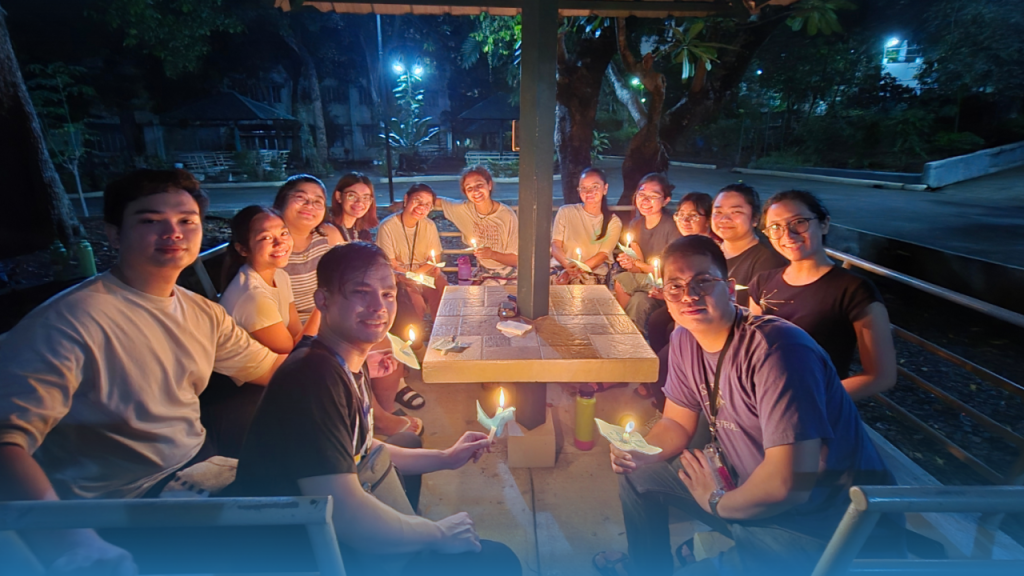
After undergoing tedious workshops and seminars on various human rights topics, the interns traveled fourteen long hours from Quezon City to their immersion sites in Sta. Ana Cagayan. They were deployed in three different Agta communities in Sta. Ana, including two (2) mountains and one (1) island communities. They were welcomed by their foster families where they lived for seven (7) days (June 24-30).
The immersion opportunity is a three-decade tradition of the internship program of AHRC which was intended to give law interns the chance to understand the complexities of the problems that communities in the grassroots experience. With the immersion, AHRC hopes to develop among its interns the passion to learn the law, serve the people, and pursue alternative lawyering in the future.
Atty. Katrina Isabela Blanco, AHRC Program Officer and one of the supervising lawyers who led the SIP this year shared that the internship program of the Ateneo Human Rights Center is more than just a training ground for young law students aspiring to be lawyers for the underrepresented communities. As an AHRC alumni herself, Atty. Blanco completely knew how the internship formation of AHRC was designed.
“The Internship Program is more than just a training ground. It is designed where values are formed and futures are shaped, hopefully, to inspire future advocates and lawyers-for-communities that in turn will walk and assist others,” Atty. Blanco said.
She also added that part of the program process is to push interns to bring their knowledge of the law to where injustices are prevalent and where the rule of law is needed the most. “Part of the process is pushing the interns to go beyond the four walls of the classroom, immerse themselves, and respond to the signs of times – to where there is a greater need.”
True enough, the SIP experience served as an inspiration to the interns this year in terms of advocating for human rights promotion. For Jennifer Rodriguez, a sophomore student at the Ateneo Law School and AHRC SIP 2024 intern, the internship opportunity with AHRC was an eye-opener as it led her to realizations she deems significant to her journey as a law student.
“My AHRC SIP (summer internship program) experience was truly an eye-opening experience, for this is where I get to see the gaps in the law, in its execution, and how it truly works on the ground. Hopefully, with this eye-opening experience comes hope, that eventually, upon seeing its gaps, we can have the opportunity to work on it and thus, fill it with one that is sensitive to the conditions of the people,” she stressed.
Jennifer was inspired to sign up for the AHRC internship program because she particularly shares the same vision with AHRC and that is to have a just and humane society.
“Whenever people ask me why I took up law, it is because of this kind of vision that I want for the Philippines: where the kids can grow up in a safe environment, where gender is not a hindrance in attaining one’s dream, where one’s social status does not determine their access to justice. I knew I could do much more than study; I wanted to do more than just studying. Thus, I applied for the internship program to be able to use my knowledge simultaneously in the service of the people,” she articulated.
Saul Yuris Adato, also a sophomore at the ALS and AHRC SIP 2024 intern, considered his internship experience in AHRC a life-changing encounter. “It’s a program where you go through a lot of things and you come out a different person. From the training during the Basic Orientation Seminar (BOS), the immersion, and the internship–it gives you a glimpse of the life of a human rights activist and that’s what I want to pursue,” said he.

As the interns immerse themselves in their respective communities, each day seems to reveal certain realities about the people in the area–their living conditions, socioeconomic and political challenges, and even legal struggles. This, along with other narratives from the people that depict the complexities of their societal struggles, allow interns to view on the ground situations beyond legal perspective. And hopefully, this inspires them to use this experience to pursue alternative lawyering in the future.
For Saul, the issues his foster community encounters are quite common to any indigenous communities in the country. These include lack of access to basic necessities and services, displacement, and discrimination. His exposure to these harsh realities of the community inspired him to be more active in advocating human rights and be at the forefront of pushing for significant societal changes.
“I realized that nothing changes if nobody pushes for change. In my journey as a human rights advocate, I need to be at the forefront pushing for change. I keep thinking of the line that goes, “Kapag namulat ka sa katotohanan, kasalanan na ang pumikit.” We can’t keep our heads down and ignore the harsh realities that our society is facing,” he exclaimed.
Jennifer also encountered almost similar issues in her foster community. She noted, however, that apart from lack of access to basic services and discrimination, her community also faces land-grabbing that results in grave threats and intimidation, something that is also very common to many indigenous communities in the Philippines.
“The community has already encountered numerous threats from people wanting to buy their land that it also created a dispute within their community where some would allegedly opt to negotiate with them. This issue also relates to the issue on their application of Certificate of Ancestral Domain Title (CADT) that has been going on for 7 years,” Jennifer revealed.
She also added that other issues like discrimination contributed to the lack of access to education of the young people in the community. “Many of the children and teenagers in their community would experience discrimination in their schools to the extent that they would choose to go back to their family instead of finishing their studies, thus, making education even more difficult to attain for them.”
After their seven-day immersion, interns did not only see the problems of their respective foster communities. They also brought with them their realizations and reflections, including raw ideas on how they can contribute using the law in addressing the issues of the communities. To help them process and debrief from their experience, a post-immersion evaluation and planning was conducted on August 1-3, 2024 in Antipolo City.
The Evaluation and Planning is a component of the internship program that takes place after the immersion. The three-day evaluation and planning allows interns to process their immersion experience, identify legal issues in their respective communities, and lay out potential plans and strategies to address them moving forward. This is also where the interns are expected to elect batch officers and identify their official batch name anchored on their most memorable immersion experience.
For Jennifer and Saul, there are several things they are looking forward to doing when they become lawyers someday. They intend to contribute in the future by being lawyers for the marginalized that address the issues of those underrepresented, especially the indigenous peoples.
“As a future lawyer, I want to be able to help in the future in refining the process of Certificate of Ancestral Domain Title (CADT) so that we can give the IPs their rightful lands in a speedy and inexpensive manner, and thus, hopefully, we can create a process that will no longer be seen as a means to more injustice to the indigenous communities,” Jennifer expressed.
Saul, on the other hand, intends to contribute in eliminating discrimination against indigenous peoples when he becomes a lawyer in the future.
“I intend to hopefully help create a space for Indigenous Communities where they can just be themselves and feel included and not excluded in our society. They, too, have rights,” he shared.
On the evening of August 3, the SIP 2024 interns elected their batch officers. Jennifer emerged as the Batch Head after being voted by her fellow interns. The interns also decided to officially call their batch Okan–an Agta term which means to join. It is as if Batch Okan is inviting everyone, including AHRC alumni, resident interns, and future interns to join them as they advocate for human rights and access to justice for all.
The Ateneo Human Rights Center’s Internship Program also proudly celebrates its 37th anniversary of internship formation this year. As AHRC continues to take pride in producing law interns who have hearts for serving others, the organization is also eternally grateful to institutional partners that have helped sustain the program over the years—the Ateneo Law School and the Friedrich Naumann Foundation for Freedom Philippines.
